Unfolding Love: Creative Ways to Use a 3D Valentine's Day Postcard SVG Bundle
There is something undeniably magical about receiving a card that pops open to reveal a hidden world of paper engineering. In an era where digital messages vanish into the ether with a swipe, a tangible, handcrafted piece of art carries a weight that pixels simply cannot match. This is exactly why so many creatives, hobbyists, and small business owners are turning their attention to the 3D Valentine's Day Postcard SVG Bundle. It isn't just a collection of files; it is a toolkit for creating moments of genuine surprise and connection.
When you dive into this type of digital resource, you aren't just buying a picture. You are acquiring a versatile set of blueprints designed to bring depth to your crafting projects. These bundles typically arrive as a comprehensive zip folder containing ten unique designs, each meticulously crafted to fold, layer, and stand out. With formats ranging from SVG and DXF for cutting machines to EPS, PDF, JPEG, and PNG for general design work, the possibilities for application are nearly endless. Whether you are a seasoned papercraft artist or someone looking to add a personal touch to a classroom party, understanding how to leverage these files can transform your approach to the holiday.
Beyond the Greeting Card: Real-World Applications
The most obvious use case for a 3D Valentine's Day Postcard SVG Bundle is, of course, the greeting card itself. Imagine handing your partner a standard envelope, only for them to pull out a card that unfolds into a intricate heart lattice or a blooming rose garden. The "wow" factor here is immense. However, limiting these designs to traditional mail would be a missed opportunity. Savvy crafters are increasingly using these SVG files to create standalone decor pieces.
Consider the home decorator who wants to refresh their space for February without buying mass-produced plastic ornaments. By cutting these designs from high-quality cardstock or even thin wood veneer, you can create stunning wall art, shelf sitters, or window hangings. Because the files often include layers, you can play with shadow box effects, placing a vibrant red heart layer over a soft pink background to create depth without needing complex assembly. For office environments, these designs make for incredible desk displays that foster a warm, festive atmosphere without crossing into unprofessional territory.
Educators and camp counselors also find immense value in these bundles. Planning a Valentine's Day party for a group of children or teens can be chaotic, but having pre-designed templates streamlines the process. Instead of spending hours drawing patterns by hand, a teacher can load the DXF or SVG files into a classroom cutting machine. Students can then focus on the fun parts: assembling, coloring, and personalizing their 3D creations. It turns a craft session into a lesson on geometry and spatial reasoning, all while celebrating the holiday.
Tailoring the Experience for Different Audiences
One of the strengths of working with digital SVG bundles is the ability to adapt the base design to fit specific audiences. A freelance graphic designer might use the PNG or JPEG versions of these 3D postcards as mockups for client presentations. Showing a client how their logo or message would look on a dimensional card is far more persuasive than a flat 2D image. It helps visualize the final product, bridging the gap between concept and reality.
For small business owners selling handmade goods on platforms like Etsy or at local craft fairs, these bundles are a goldmine for product development. Time is money, and drafting complex 3D mechanisms from scratch can take days. By starting with a proven 3D Valentine's Day Postcard SVG Bundle, artisans can skip the trial-and-error phase of engineering the folds and jump straight to production. They can experiment with different paper textures—kraft, glitter, metallic, or recycled—to create a unique product line. The key here is customization; while the structure comes from the bundle, the materials and finishing touches make the item uniquely yours.
Even corporate event planners can utilize these resources. Think about employee appreciation gifts or client thank-you notes. A generic printed card is forgettable. A hand-assembled 3D card shows effort and thoughtfulness. Companies can print their branding subtly on the interior flaps or use company colors for the cardstock, turning a sweet gesture into a subtle brand reinforcement tool.
Practical Considerations Before You Start
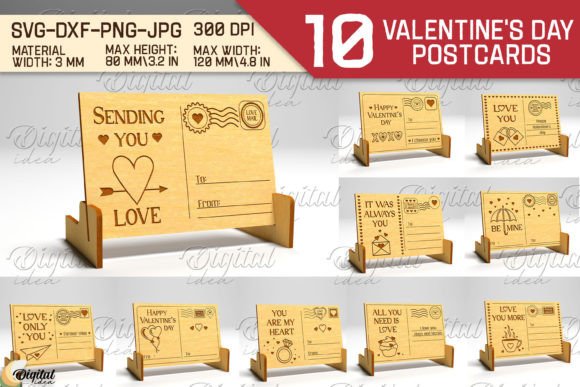
Before you rush to download and cut, there are a few practical things to keep in mind to ensure your project is a success. First and foremost, remember that this is a digital product. No physical goods will be sent to your door. The photos you see in the listing are intended only for inspiration, showcasing what is possible when the files are brought to life. Your success depends on your choice of materials and your assembly technique.
Material selection is critical for 3D projects. Unlike flat cuts, 3D cards rely on the structural integrity of the paper to hold their shape. Standard printer paper is usually too flimsy. You will want to invest in cardstock with a weight between 65lb and 80lb (roughly 176–216 gsm). If the paper is too thick, it won't fold cleanly along the score lines; if it's too thin, the 3D elements will collapse. Testing a single design on a scrap piece of your intended material is always a wise move before committing to a full batch.
Another consideration is the file format. If you are using a Cricut, Silhouette, or similar electronic cutter, the SVG or DXF files are your best friends. They preserve the cut lines and score lines necessary for the folding mechanism to work. If you don't have a cutting machine, the PDF and PNG files are excellent alternatives. You can print these directly onto cardstock and use a craft knife and a scoring tool (or a dull butter knife) to manually cut and fold the pieces. While more labor-intensive, the manual approach adds a rustic, authentic charm to the final piece.
Navigating Limitations and Maximizing Potential
While these bundles offer a fantastic head start, they do come with inherent limitations that users should respect. The designs are fixed in their geometry. You cannot arbitrarily stretch or squash a 3D mechanism without breaking the folding logic. If you try to resize a complex pop-up element too drastically in your software, the tabs might not align, and the card won't close properly. It is generally safe to scale designs up or down within a reasonable range (perhaps 80% to 120%), but extreme resizing requires recalculating the fold lines, which defeats the purpose of buying a ready-made bundle.
Furthermore, the complexity of assembly varies. Some designs in a typical 10-design bundle might be simple single-layer pop-ups, while others could involve multi-step gluing and intricate tabbing. It is important to assess your own patience and dexterity levels. If you are making these with young children, stick to the simpler designs. If you are looking for a challenging weekend project, tackle the more complex lattices first.
Despite these minor hurdles, the value proposition remains incredibly strong. The ability to produce professional-looking, dimensional art from a simple download is a game-changer for the modern maker. It democratizes paper engineering, allowing anyone with a printer or a cutting machine to create sophisticated gifts.
Ultimately, the goal of using a 3D Valentine's Day Postcard SVG Bundle is to convey emotion through craftsmanship. Whether you are making a proposal card, a classroom activity, or a decorative piece for your mantle, the result is a physical manifestation of care. The time you spend selecting the perfect paper, cutting the precise lines, and folding the delicate creases translates into a recipient feeling truly valued. In a world of instant gratification, taking the time to build something three-dimensional is the ultimate gesture of love.
If you are ready to start creating, ensure you have the right tools on hand: a sharp blade, a bone folder for crisp creases, and a good quality adhesive. Dive into the zip folder, explore the ten distinct designs included, and let your imagination dictate the color palette and presentation. Happy shopping, and may your creations bring joy to everyone who receives them. If you ever find yourself unsure about a specific file format or need advice on material pairing, reaching out to the creator is always a good step—they are there to help you succeed in your crafting journey.