Integrating Joyful 3D Christmas Sublimation into Your Holiday Production Workflow
The holiday season represents a critical window for creators, small business owners, and hobbyists alike. It is a period where planning meets execution, and the quality of your assets directly influences the success of your final products. In this context, Joyful 3D Christmas Sublimation designs serve as more than just decorative images; they are foundational components in a broader manufacturing and creative process. Understanding how to effectively integrate these high-resolution assets into your existing workflow is essential for maintaining efficiency, ensuring product consistency, and delivering professional results to your customers or recipients.
When we discuss sublimation in a professional setting, we are talking about a chemical process that requires precision. The transition from a digital file to a physical object involves several variables, including heat, pressure, time, and substrate compatibility. A design labeled as "Joyful 3D Christmas Sublimation" implies a specific visual depth and vibrancy that must be preserved through this transfer. To achieve this, one must approach the project with a mindset focused on preparation and technical compatibility rather than simply hitting "print." The value of such a design lies not only in its aesthetic appeal but in its readiness for production environments.
Pre-Production Planning and Asset Verification
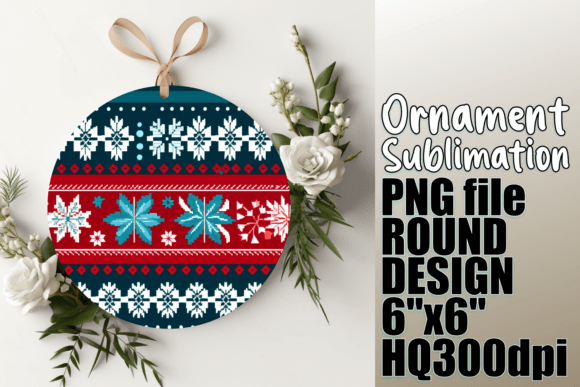
Before any heat press is warmed up or any blank is ordered, the workflow begins with digital asset management. The download package for a typical high-quality sublimation design includes a PNG file, often optimized for specific dimensions such as a 6-inch by 6-inch round format. However, possessing the file is only the first step. A thorough understanding of your software environment is requisite. Whether you are using Adobe Photoshop, Illustrator, Canva, or specialized RIP software, you must verify that your workspace is configured to handle the file's native resolution.
These templates are typically provided at 300 DPI (dots per inch). This resolution is the industry standard for crisp, clear prints that do not appear pixelated when transferred to physical media. If your software defaults to 72 DPI (common for web graphics), importing the file without adjusting the document settings can degrade the image quality before you even begin. Therefore, the initial phase of your workflow involves opening the file, confirming the image size matches your intended substrate, and ensuring no unintended scaling has occurred. This attention to detail prevents costly mistakes later in the process, such as running out of ink mid-print or discovering the design is too small for the ornament or coaster you intend to produce.
Furthermore, organization plays a pivotal role during the pre-production phase. For entrepreneurs managing multiple SKUs or hobbyists creating gifts for extended family, keeping track of which design corresponds to which product is vital. Naming conventions should be clear. Instead of generic filenames, adopt a system that includes the design name, dimensions, and intended use case. This practice streamlines the retrieval process when you are ready to batch produce items, reducing the cognitive load and minimizing the risk of selecting the wrong file for a specific order.
Technical Compatibility and Equipment Readiness
It is crucial to acknowledge the limitations and requirements of the sublimation process itself. Support for digital files generally covers issues related to the file integrity, such as corruption upon download or clarity concerns. It does not extend to troubleshooting hardware malfunctions, ink chemistry, or substrate failures. Consequently, ensuring you have the requisite equipment and materials before purchasing or downloading a design is a fundamental responsibility of the operator.
Your printer must be capable of handling sublimation ink, which differs significantly from standard dye or pigment inks. Sublimation ink turns into a gas when heated, bonding with polymer-coated surfaces. If you attempt to use these files on a standard home printer without converted ink systems, the result will be a failure. Similarly, the substrate—the item you are printing on—must have a polyester coating or be made of a polymer material. Natural fibers like 100% cotton or uncoated ceramics will not accept the transfer. When utilizing a Joyful 3D Christmas Sublimation design for a 6x6 round project, ensure your heat press or oven setup accommodates that specific shape. Round presses require even pressure distribution to avoid ghosting or blurring, which can ruin the 3D effect of the artwork.
Color management is another technical hurdle that requires proactive handling. Monitors display colors in RGB (Red, Green, Blue), while printers operate in CMYK (Cyan, Magenta, Yellow, Key/Black) or specific sublimation color profiles. The vibrant reds and greens typical of Christmas designs can shift during printing. Professionals often run test prints on sublimation paper to calibrate their color profiles before committing to expensive blanks. This step ensures that the "joyful" aspect of the design translates accurately from the screen to the physical product, maintaining the intended emotional impact of the holiday theme.
Execution: From Digital File to Physical Product
Once preparation and equipment checks are complete, the execution phase begins. This is where the theoretical planning meets physical reality. The workflow for applying a 300 DPI PNG to a round substrate involves precise alignment. For round items, centering the design is critical. Many creators use template overlays in their design software to visualize the cut lines or the safe zone of the substrate. Since the file is modifiable, you have the flexibility to add text, names, or dates to personalize the item. This customization adds significant value, transforming a generic decoration into a bespoke keepsake.
During the pressing process, consistency is key. If you are producing a batch of ornaments for a craft fair or corporate gifts, every unit must be pressed with the same temperature, pressure, and time settings. Variations here can lead to inconsistent color saturation. A design with 3D elements relies on contrast and shading to create depth; under-pressing can result in washed-out colors, while over-pressing can cause scorching or yellowing of the white background. Keeping a production log is a practical method for maintaining this consistency. Record the settings used for the first successful print and replicate them exactly for subsequent units.
Quality control should occur immediately after the item cools. Sublimation transfers often look dull while hot and only reveal their true vibrancy once cooled. Inspect each piece for imperfections such as ink streaks, uneven edges, or misalignment. Because the PNG files are high-resolution, any flaw in the final product is likely due to the pressing process or the substrate quality, not the digital asset. Identifying these issues early allows you to adjust your technique or reject faulty blanks before packaging, protecting your brand reputation and ensuring customer satisfaction.
Long-Term Utility and Workflow Integration
The utility of a well-crafted sublimation file extends beyond a single holiday season. While the theme is specifically Christmas, the techniques learned and the workflows established during this period are transferable to year-round production. The discipline of managing high-resolution assets, calibrating color profiles, and maintaining equipment hygiene forms the backbone of a sustainable creative business. Moreover, because these templates are modifiable, they can serve as a base for future iterations. You might adjust the color palette for a winter-themed non-holiday product or repurpose the 3D structural elements for different seasonal campaigns.
For educators and content creators, these files offer a tangible way to teach digital fabrication concepts. They demonstrate the relationship between digital resolution and physical output, providing a clear example of why 300 DPI matters in print media. For marketers, the ability to quickly produce high-quality, branded merchandise using reliable templates allows for agile promotional strategies. You can respond to trends or specific client requests with speed, knowing that the core asset is already optimized for production.
Ultimately, the successful use of Joyful 3D Christmas Sublimation files hinges on a respectful understanding of the entire ecosystem surrounding them. It is not merely about downloading an image; it is about integrating that image into a disciplined process of creation. By focusing on preparation, verifying technical compatibility, executing with precision, and maintaining rigorous quality standards, you ensure that the final product reflects the care and effort invested in the workflow. Should you encounter specific issues regarding the file itself—such as download errors or clarity questions—support is available to assist. However, the mastery of the sublimation process remains in your hands, empowered by the right tools and a structured approach to making.